DIS-TANZEN 2023
HUMANE – Interspecies research
Funded by the Federal Government Commissioner for Culture and Media in the NEUSTART KULTUR programme, [auxiliary program DIS-TANZEN/ tanz:digital/ DIS-TANZ-START] of the umbrella organization Tanz Deutschland.”





MANIFESTO
Text by Barbara Berti and Simon Rose
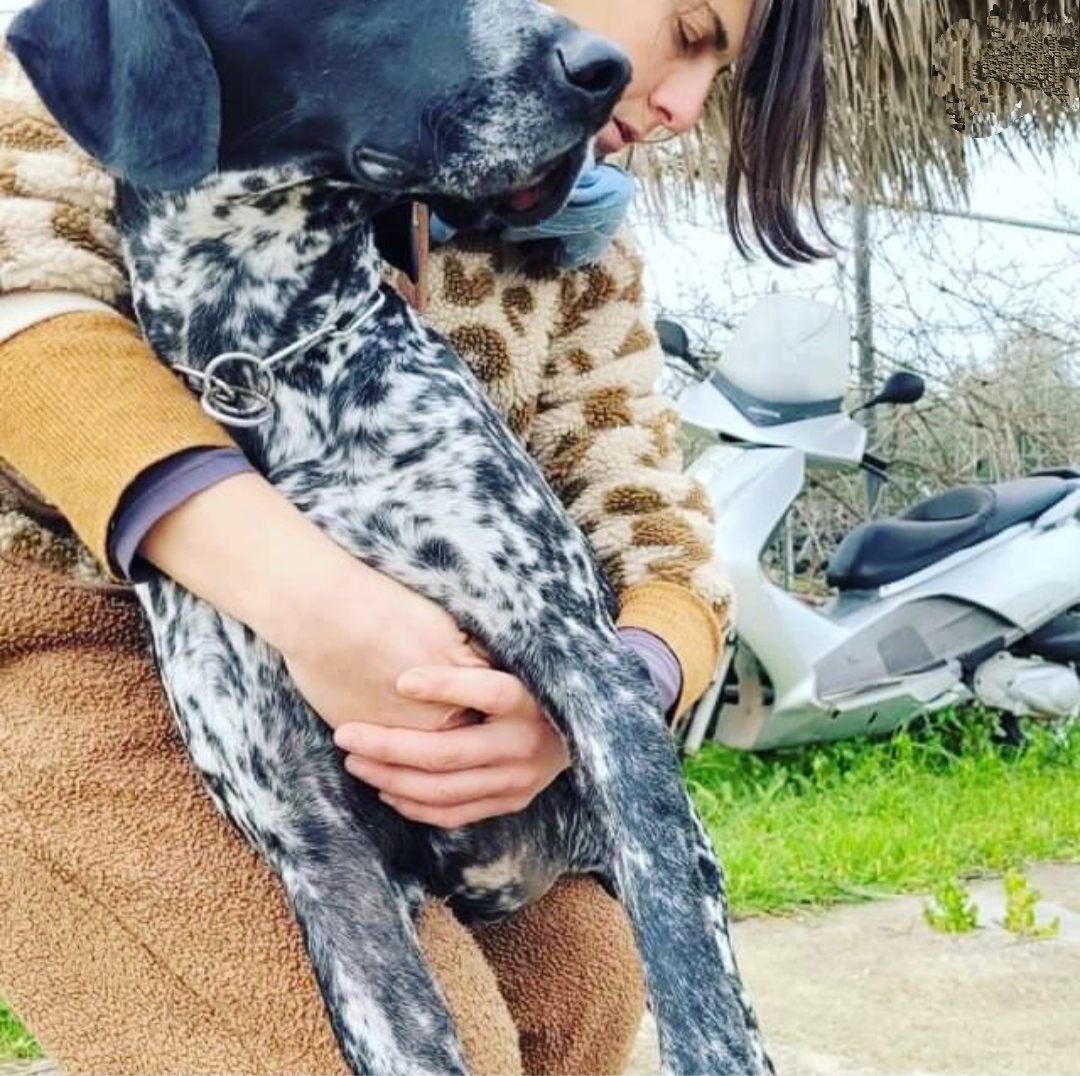
Through the sensory, physical contact, improvisation, and somatic practice the work with animals becomes a kind of embodying of the other: an interspecies intersubjectivity and inter-corporeality in which, through a process of shared activity, one internalises the state of the other. As with improvisation in dance or music the more we know about the other, through awareness and doing, the richer the practice may become. The same is true with animals as we develop our practice as a shared, living thing. It is an interspecies practice with bodies. The encounter occurs in a new space, in which negotiation begins – where two lands meet at a border, each softening into the other – searching for movement, rhythm, sensation, presence, and forming – remaining in that space, with trust and unknowing openness, as a new language is forming. Rather than ‘thinking outside the box’, this practice is to do with the absence of a box and, ultimately, non-definition is key; mind and perception need to remain open and fluid. With the overarching aim of broadening awareness through the practice, from personal to global, the unknowing openness is an achievement. And our construct of selfhood becomes questioned by the experience of sharing attention with the non-human.
The initial interest in working with animals was primarily instinctual. The interspecies work has developed through an ongoing research process and I’m continuously learning more about the significance and resonances of this work, which is multi-layered. The personal engagement I’ve developed with animals is the basis from which the practice with animals forms a performative response to contemporary environmental questions. Even young children now articulate how the humans have a very destructive relationship with other species, and we are reminded daily of the catastrophic outcomes of this (for example: through the meat industry; the transmission of diseases resulting from human endeavour; manifold extinctions resulting from to human activity; and more ). The performance work with animals through dance opens a discourse in which other ways of understanding the relationship between species can be explored by questioning how we are perceiving, experiencing and thinking about ourselves in the world. We’re actively seeking to involve public and audiences in different ways that open new experiences. Creating encounters of awareness in which inherited, damaging attitudes to individuals and the world become questioned
STATES
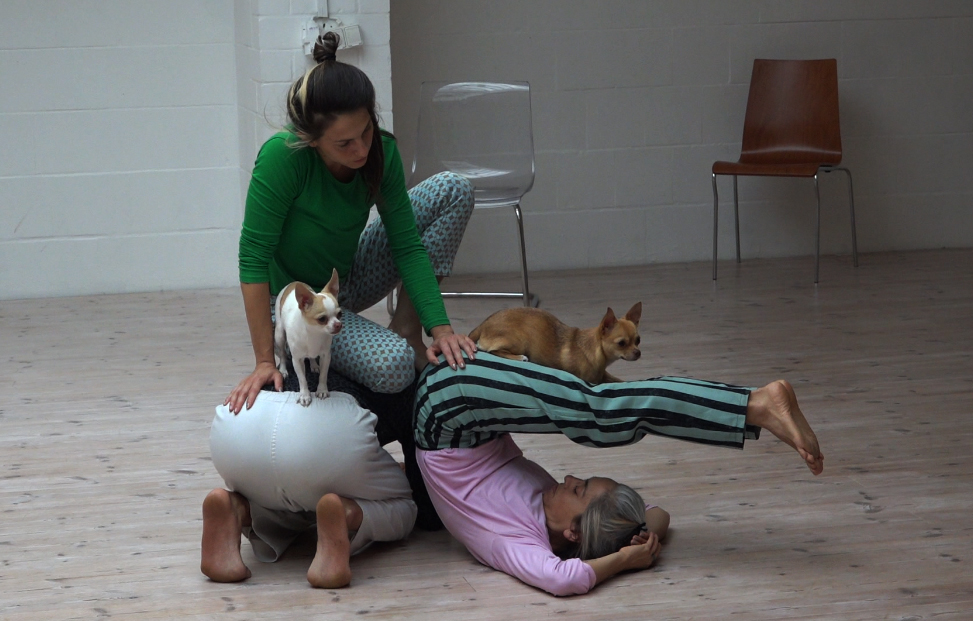
In the Species practice we’re entering the world of the animal, giving ourselves up to it and this can be strange. As we actively engage with animals, working intuitively with sensitivity, we are also building on accumulated knowledge and expertise that forms the development of practice. I find myself moving towards a shared state with the animal. Working so closely, attuning to the dog’s perception and presence as a practice, some audience members have commented that they experience something like an altered state, a seeing the world differently – they are drawn into the experience of human and dog embodying one another. We enter a state that we cannot achieve by ourselves. But what is this state? Performers engaged in the practice as well as audience members and workshop participants have reflected upon the experience of an altered state. Some described it as ‘magic’, others that the sense of time was changed, as a kind of ‘trip’, (one audience member even reported how her arm became ‘paralysed’ while watching). How does this state occur? That which is not-yet-known occurs through a performative cooperation and communication between human and non-human. So, the Species project is a being together with the dog and an invitation into the unknown. The consideration of time and timing is also present – giving time to the practice – but what does the sense of time mean to the non-human? It seems that while we remain in this perceptually open state of not knowing, giving attention to the other, the sense of self may become altered.
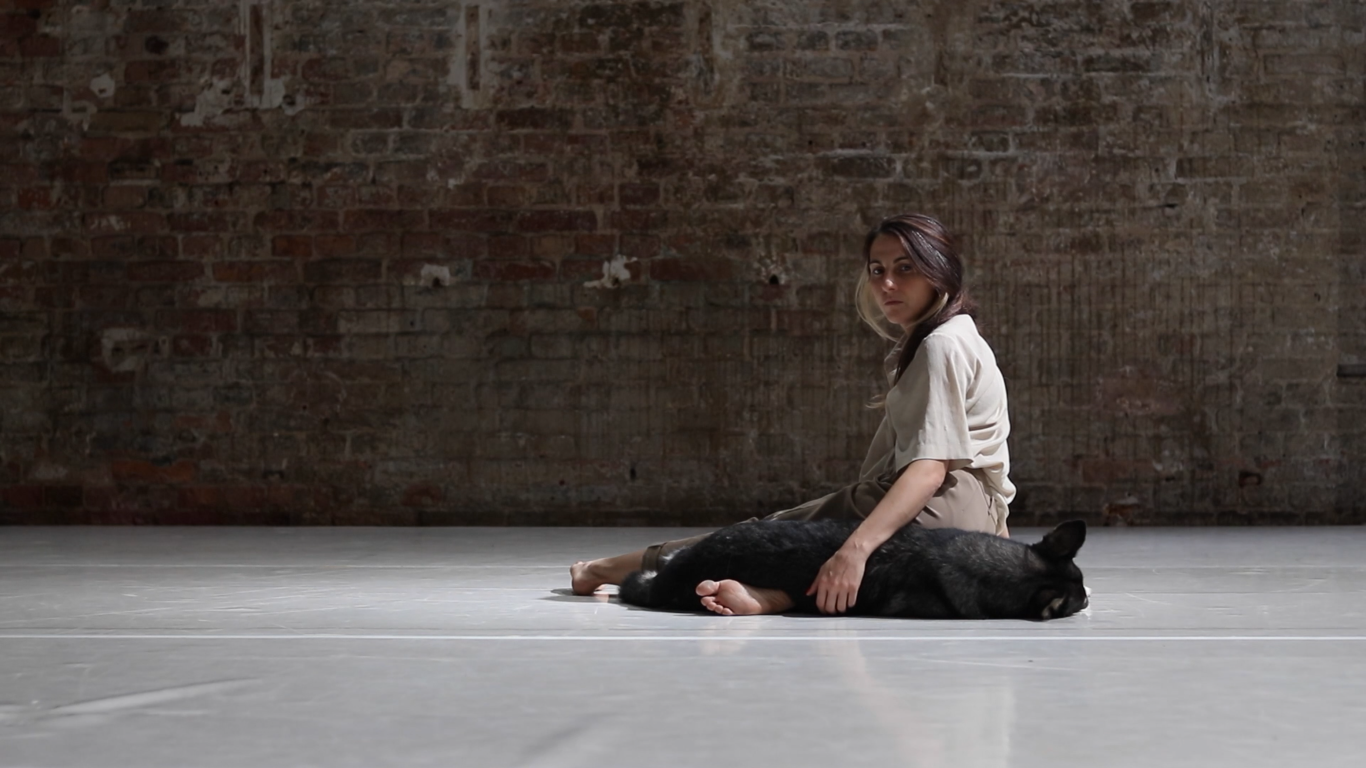
‘INTERSUBJECTIVITY’ AND EMBODIMENT OF ATTENTION
The concept of intersubjectivity, or quasi-intersubjectivity, offers a way of considering how this human/non-human interaction occurs in the dance practice . In the Species practice we use the idea of distribution of attention. This points to our embodying of the state of the other. But what does this mean? The term intersubjectivity acknowledges the complexity of human interaction, while the term’s usage varies, in phenomenology intersubjectivity is described in terms of empathy (Stein, 1989) and psychological give-and-take – improvising in particular develops from empathic, intersubjective willingness in the act of shared creative performance; a number of subjectivities co-exist, simultaneously influencing the course of events through embodied action. Intersubjectivity is significant for group learning and knowledge and has a particular character. Children learn through group activity in ways that they cannot when alone and Durkeim (1951, p. 310) writes: ‘when the consciousness of individuals, instead of remaining isolated, becomes grouped and combined, something in the world has altered’. But can we apply this understanding of the intersubjective capability to human/non-human interaction? The openness required and the willingness to explore in unknown territory in the Species project suggests that human participants will be drawing on their full potential and thereby seeking to employ intersubjectivity – empathy, psychological give-and-take – in the creative process in a way that is inclusive of non-humans. But, unlike when we improvise with another human, where we can expect reciprocity, negotiation, artistic responsiveness, and more, here we have no such expectations, yet we remain in the state of creativity. In Species we seek to find this same shared-ness with the dog. Necessarily, this isunknown terrain.
Within this dynamic, that leads to the states experienced by participants and audience members, there is a heightened sense of being present yet this is within that which is not known. There is an informed need to not define. The interspecies encounter occurs in a new space, in which negotiation begins – where two lands meet at the border, each softening into the other – searching for movement, rhythm, sensation, presence, and forming – remaining in that space, with trust and unknowing openness, as a new language is forming.
A ZONE OF ACCEPTANCE
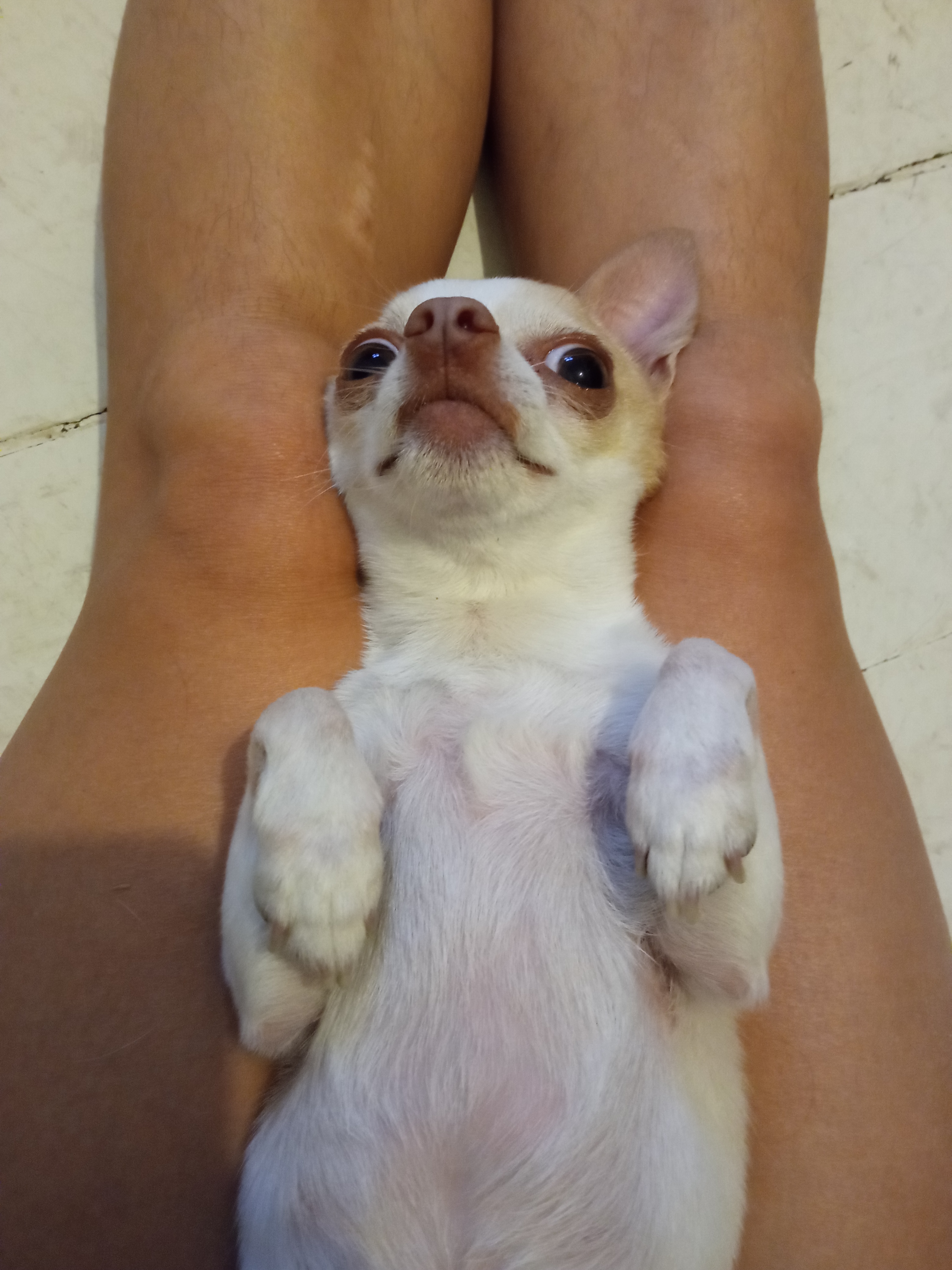
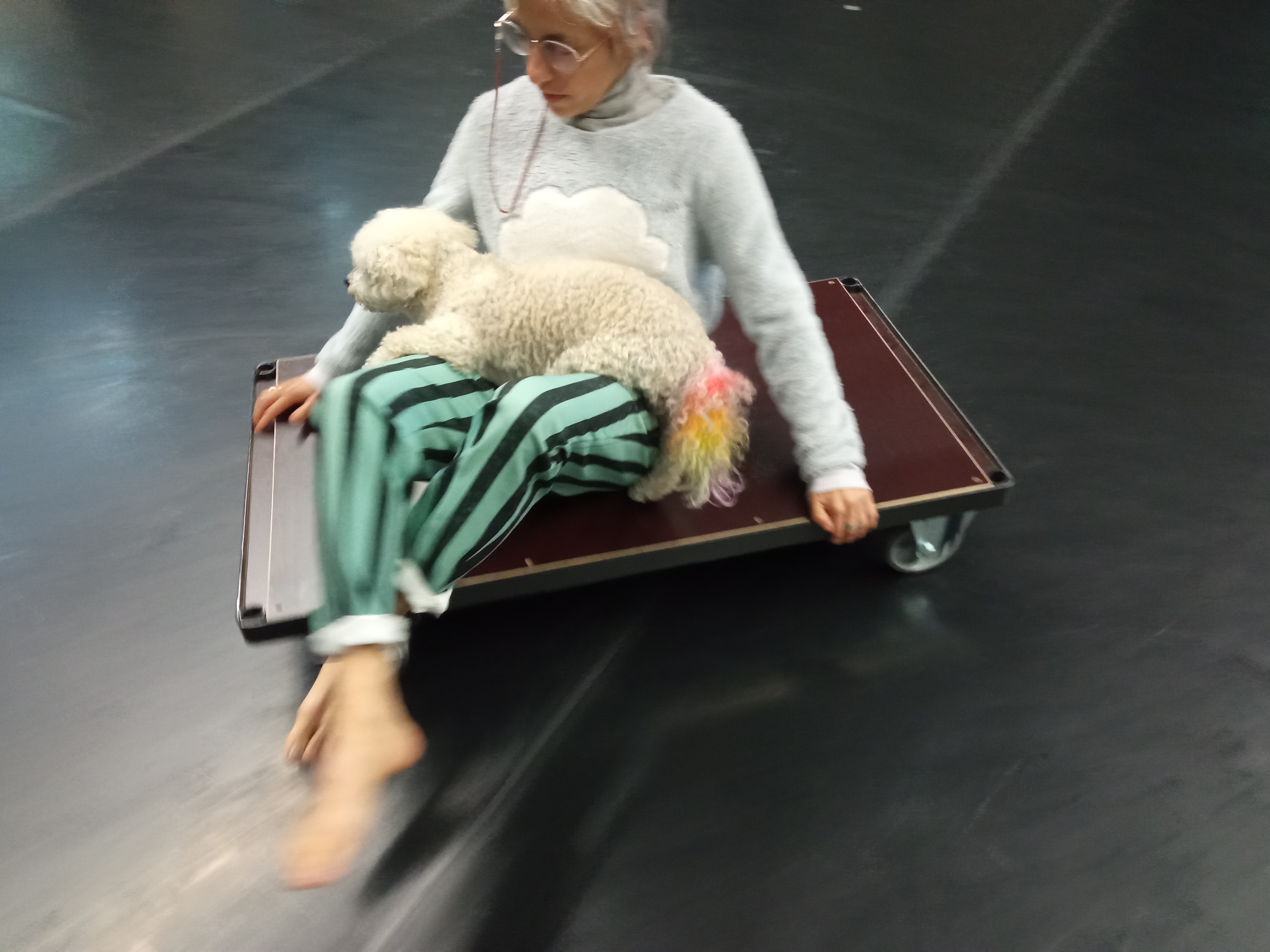
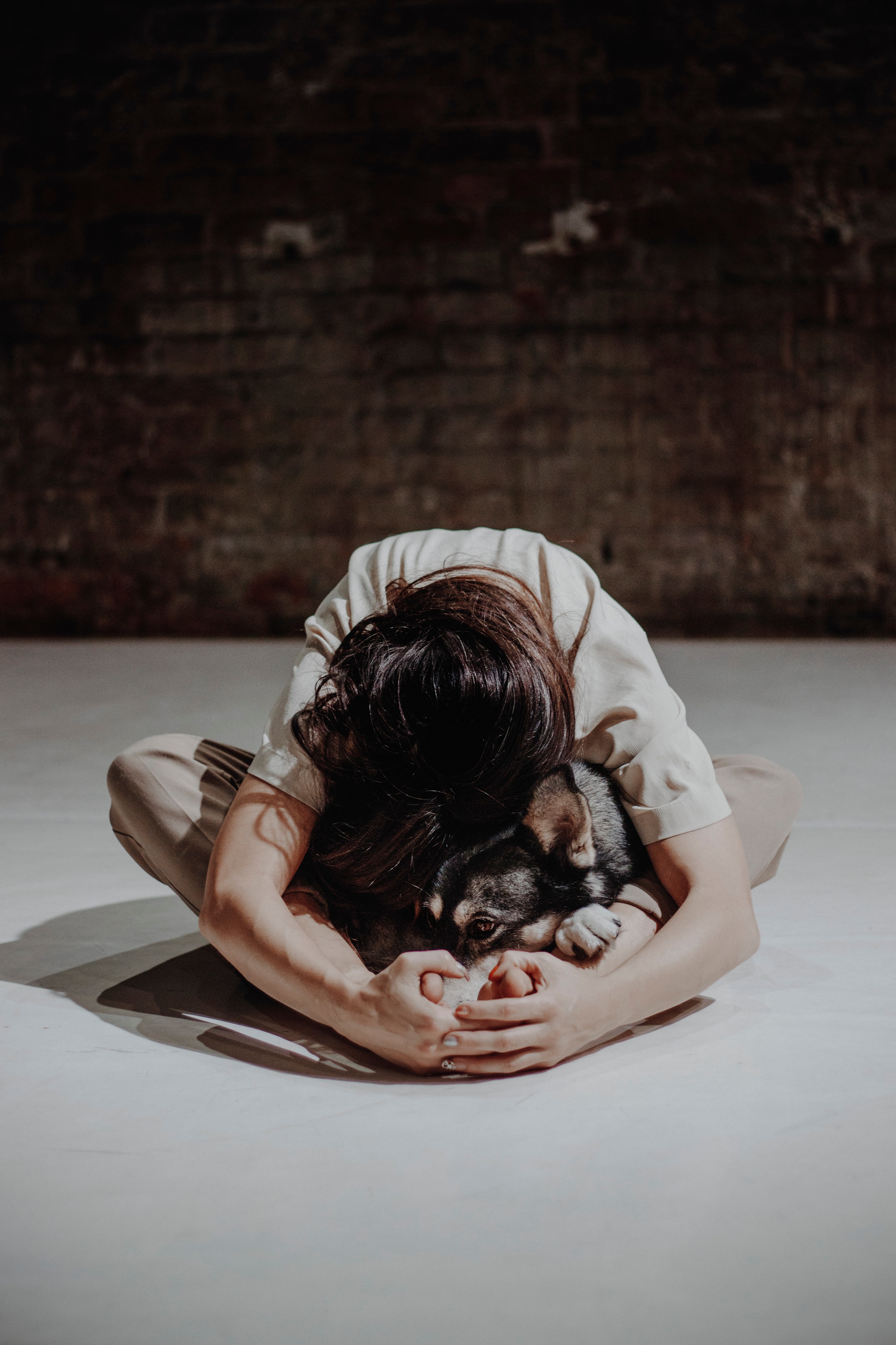
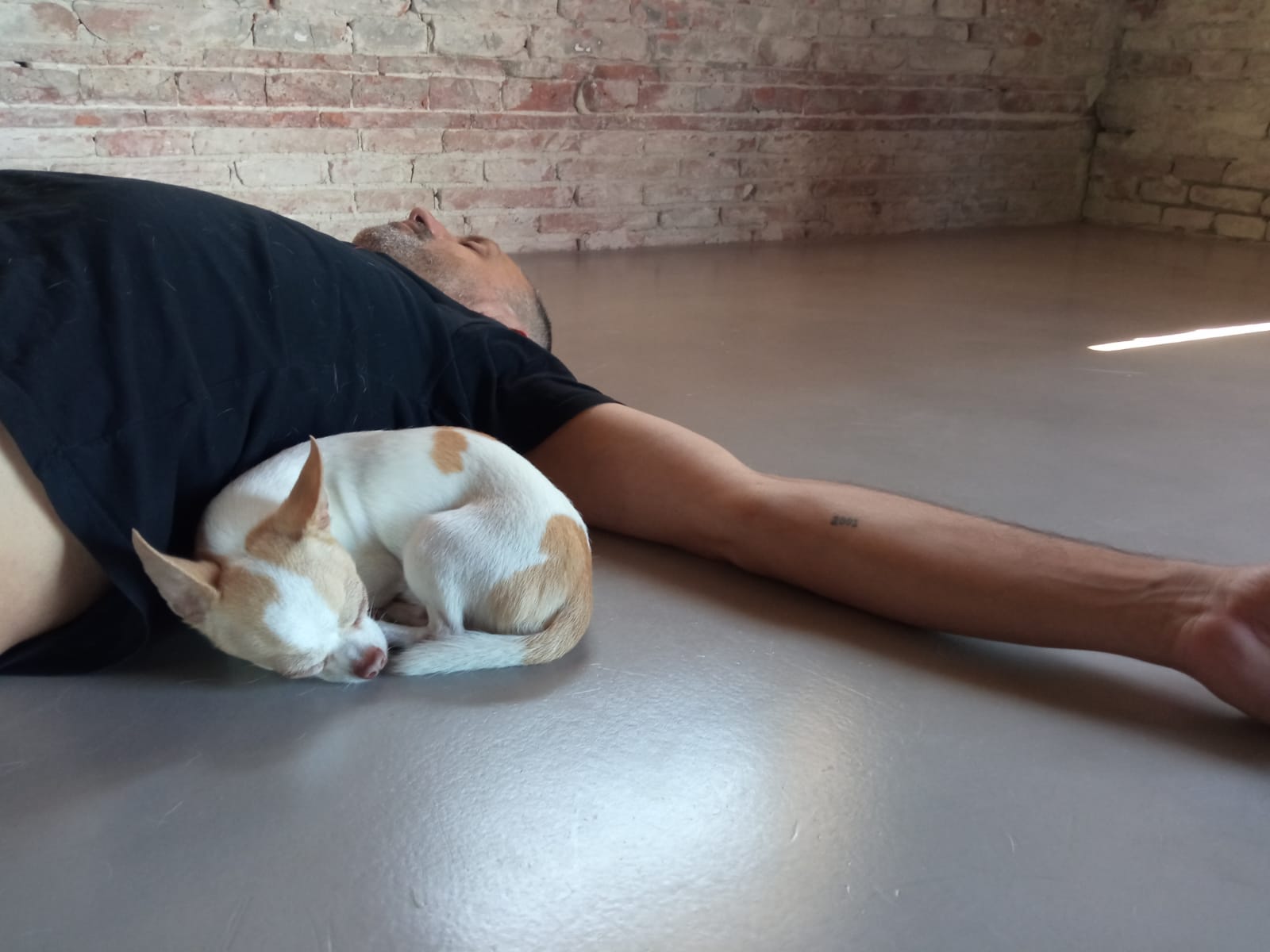
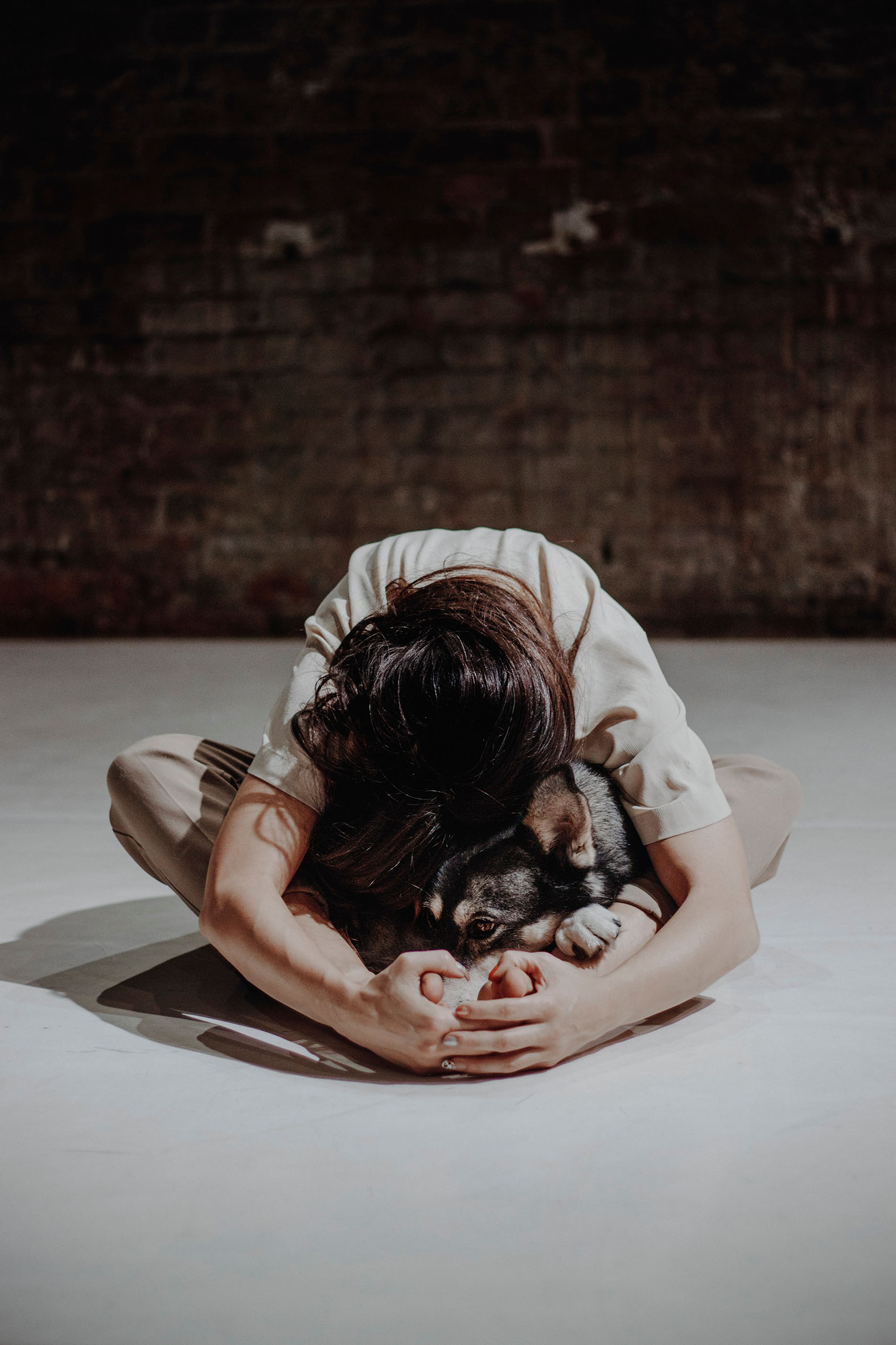
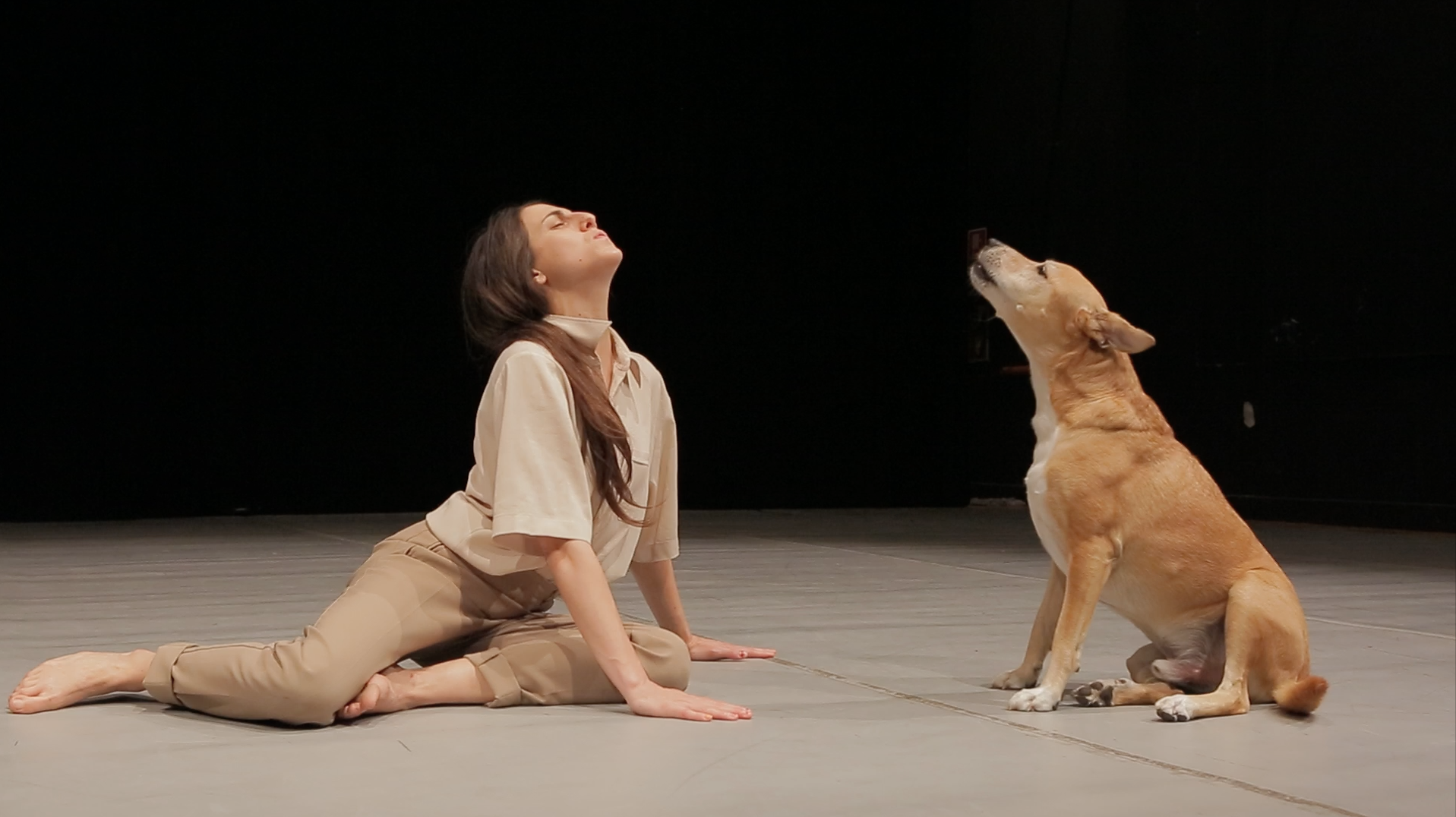
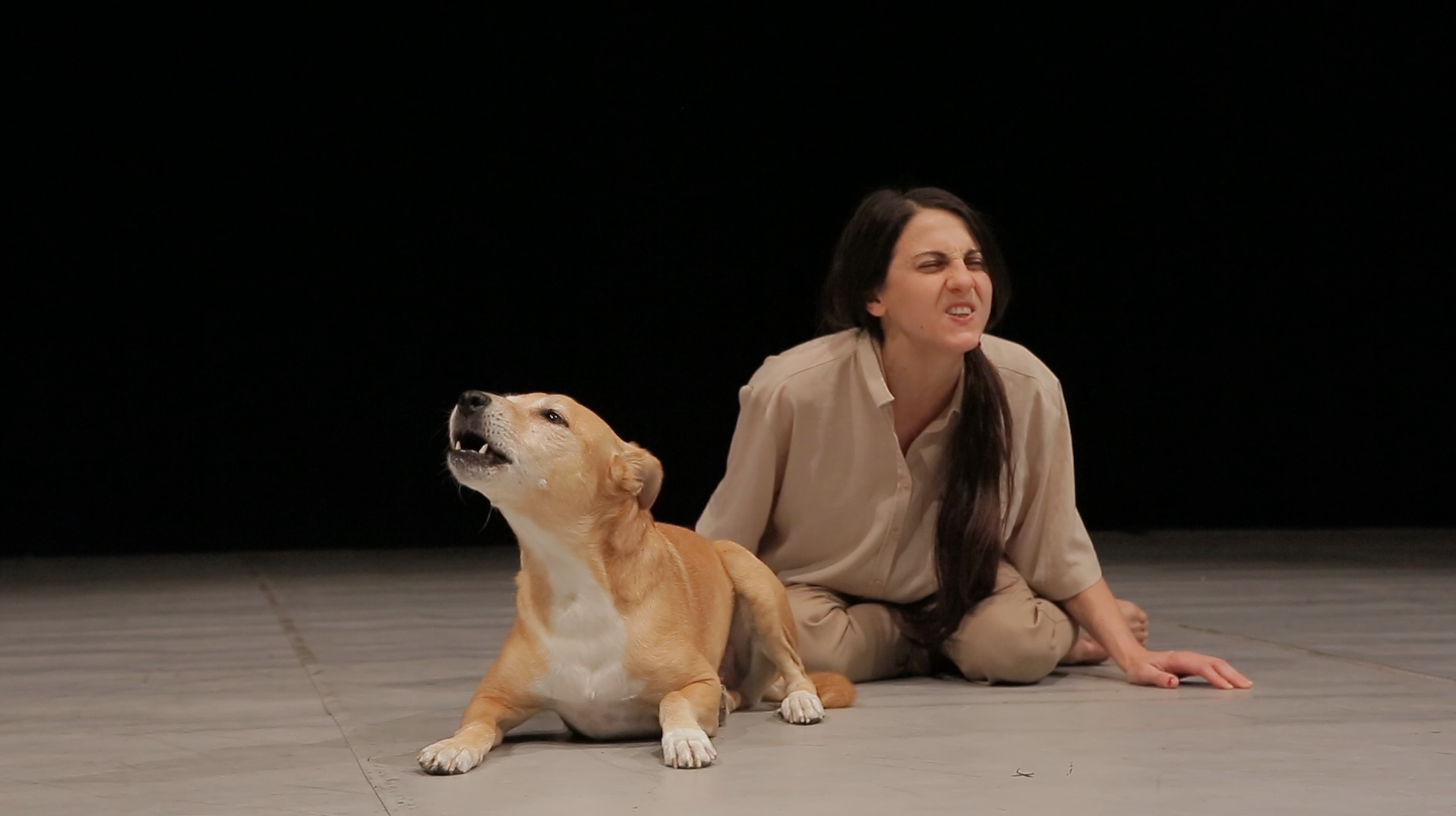
People are curious about the project, they are drawn to the idea, partly because it is novel, and it may be surprising, they want to understand why I am engaging with dogs in movement, how the process works, and what kind of dance is produced. I’m not training animals to do tricks, it’s about the experience of being together and the practices that emerge through cultivating the relationship. I’ve worked for 17 years in Contact Improvisation (CI) as well as other dance and somatic practices. From the age of 18 I volunteered in a dog shelter in Bologna for three years, where I create a group of volunteers. There is some cross-over between working with animals and the approach to CI. The somatic practice is very present and through the acute sensory approach to working with animals it becomes more extra-somatic and ultra-sensorial through which a hybrid practice has emerged. Throughout, I commit to being in contact with the dog and the significance of touch here needs to be emphasised through which we’re learning about each other and what is going on. The process is a practice of enabling improvisation, allowing for what may emerge, through which we find a new experience, together. Improvisation allows us to play on the border of what we know and what might be possible, and to overcome fear in the process. The humans and non-humans enter an encounter and the choreography becomes formed as an outcome of this state. I begin the process by meeting owners and auditioning dogs, often in public spaces. The relationship with the dog builds gradually, it’s similar to working with humans. It takes time and patience and I’ve learned how to be highly attuned to dogs’ bodies. As I’m attuning the dog is no less attuning to me – getting to know me – it’s an opportunity for the dog to have my full attention and it requires great, active sensitivity through touch and contact. Boki is a Bolonka Zwenta (Bolonka translates as Bologna – coincidentally the city of my origin), Romeo a Big Chihuahua, and Rudi Pistacchio a Chihuahua. Rudi and I also worked together in my previous production DOGOD (2020). He’s become a real companion, as has his owner, Rudi often stays with me for days at a time, and we’ve travelled long distances by train together in order to perform. Boki and Rudi have become working companions. With Rudi we develop different practices and new materials (see video below). Here we begin by being very close on the floor and I slowly roll him gently on his back, it’s clear he likes this very much and extraordinary trust is nurtured. It’s about bodies and connection, working through the sensory. This sensory aspect is one of the reasons animals are of great interest for myself as choreographer and dancer, as a source of learning – for this to be successful we humans need to open ourselves to the extraordinary sensory capabilities that dogs have as we develop the practice through shared movement and touch. The rolling develops into massage, but, as with all the work here, the massage is a two way process – I am exploring Rudi’s tendons, fascia, organs, finding his particular points of tension and flexibility and his enjoyment of this is demonstrated by his state of relaxation. In the process I also employ sound. Sounding long, gentle tones with my voice feeds into the relationship, supports the relaxation and the way the dog experiences me. I’ve lately introduced squeezing, Rudi enjoys this – it extends the trust and willingness to work together through our bodies as the practice develops into balancing and freer movement. Different qualities of touch are equally important, for example creating friction. In breathing dogs Rudi lies on top on me, belly to belly, or side to belly and we breath together for some time. From there, in connection with the breath, a series of performative movements emerge (see video below). Together these steps are all about connecting and form the zone of acceptance. Although Rudi and I are now very familiar with one another I am finding new material, ways of being together at each encounter which can become a performative practice leading to choreography and dance.
I recently worked with Mina, a ten-month-old puppy, in Santarcangelo (2021) and it was exciting to witness how such a young dog responded over just three encounters. At first she was excited and confused about the newness of myself and the situation, but like children, she learned through play, and play is very important part of the process. We visited the beach and she loves the sea –clearly happy and excited she still occasionally wondered where her owner was. By the third encounter, on returning, having been away for a week, she knew what to do, in her own way she had begun to understand the practice. From there it became possible to move to the zone of acceptance. I’ve worked with different sized dogs and each brings their own quality and character which is exciting and why I consistently develop new dog partnerships. Because Rudi is small this has led to a range of balancing and movement that is only possible due his size. Laika (see video) is very different, she is a Husky with an utterly different temperament, movement and bodily presence. The performance work that emerged with Laika using these processes and more has had quite different outcomes – at times it can become distinctly ritualistic. As well as the reference to somatic, improvisation and contact work, working with animals has other, more archetypal resonances which are always present in performance – for example, those associated with shamanism, animal spirits, liminality, animal deities. As performance comes with ritualistic potential this element resonates strongly with particular creatures and this is true with Laika. There are many aspects to this work with species, from the personal to the global, and while there is a seriousness of intent these are accessed and dependent upon a lightness of touch, it depends upon the enjoyment of all. From there the practice has developed into areas that I hadn’t imagined. The time of COVID19 has catalysed much thinking about the need to recalibrate human activity in relation to the environment – to take responsibility for the human place in the world of nature – in our own way, through dance we’re rethinking and remaking our relationship with other species.
© All rights reserved – December 2021
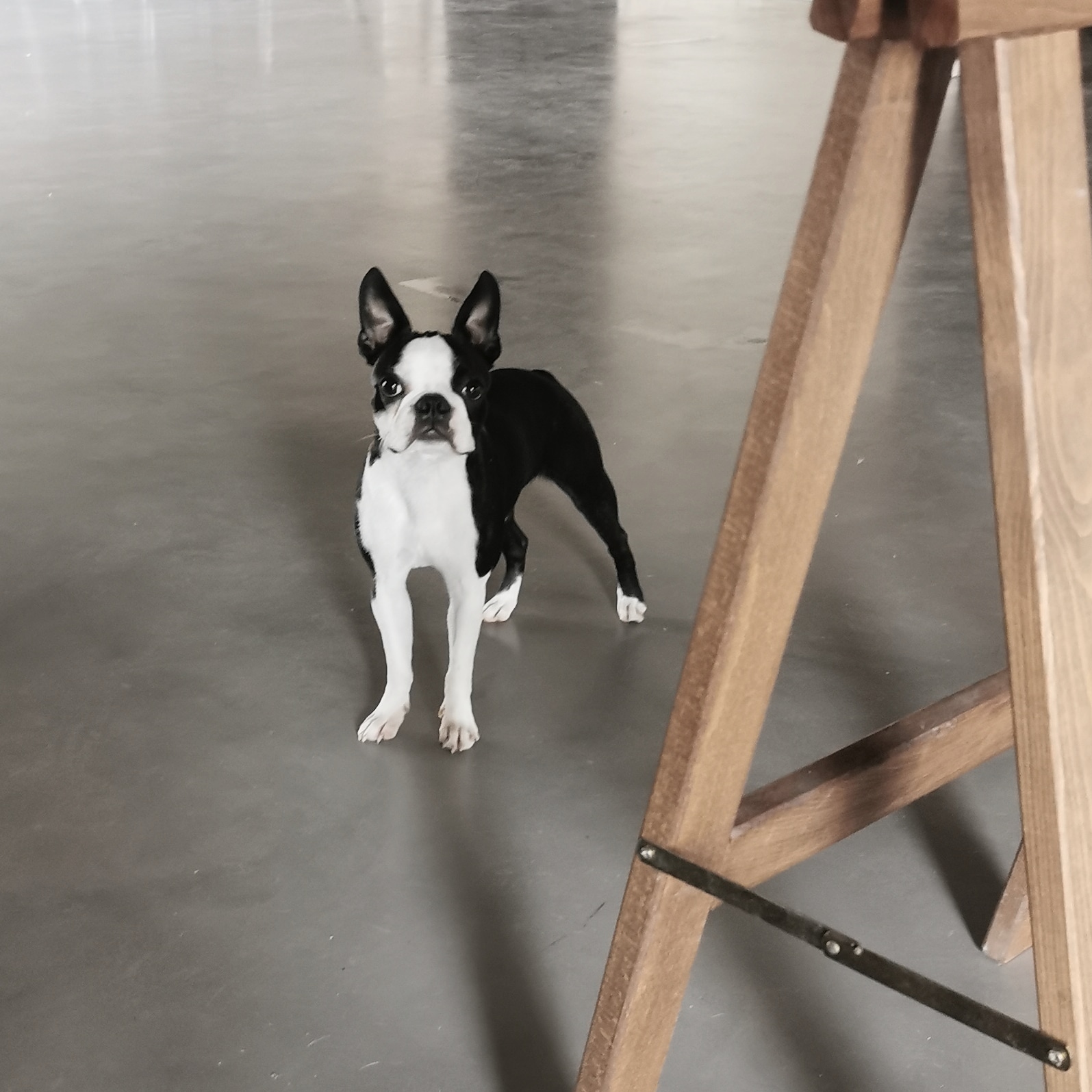
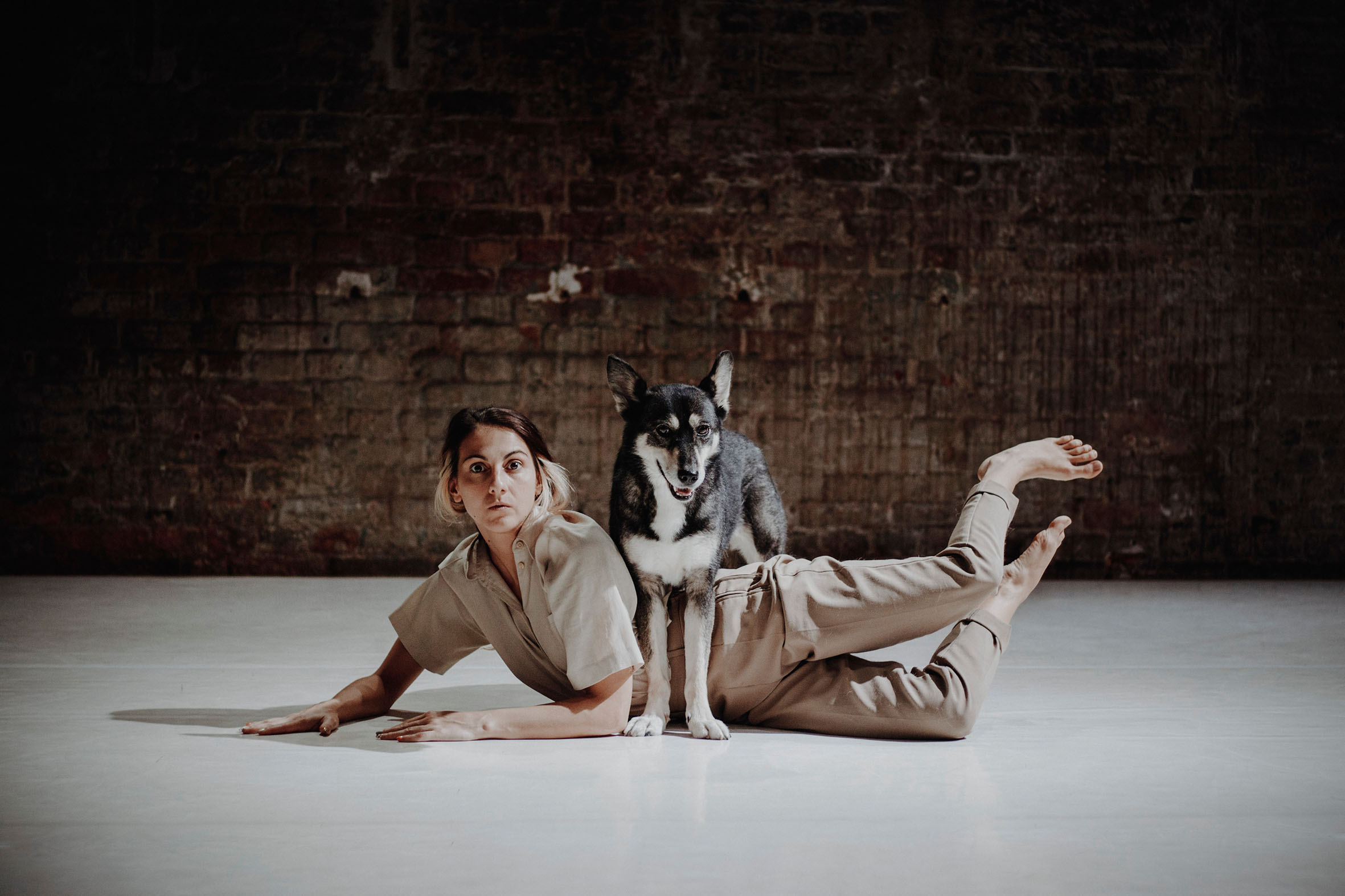
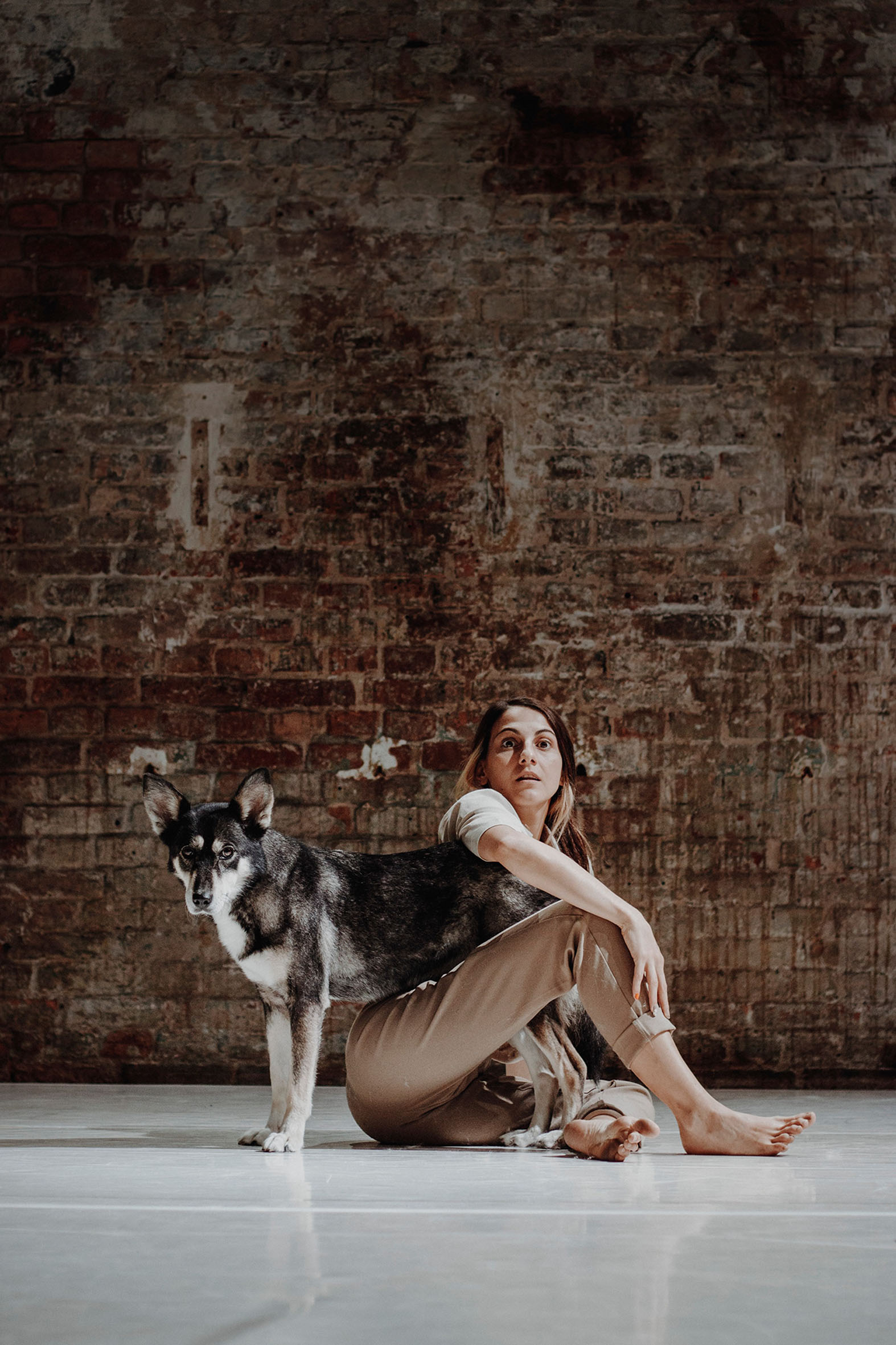
Totality of space – extract practice – Rudi pistacchio and Barbara Berti – 2020 Berlin
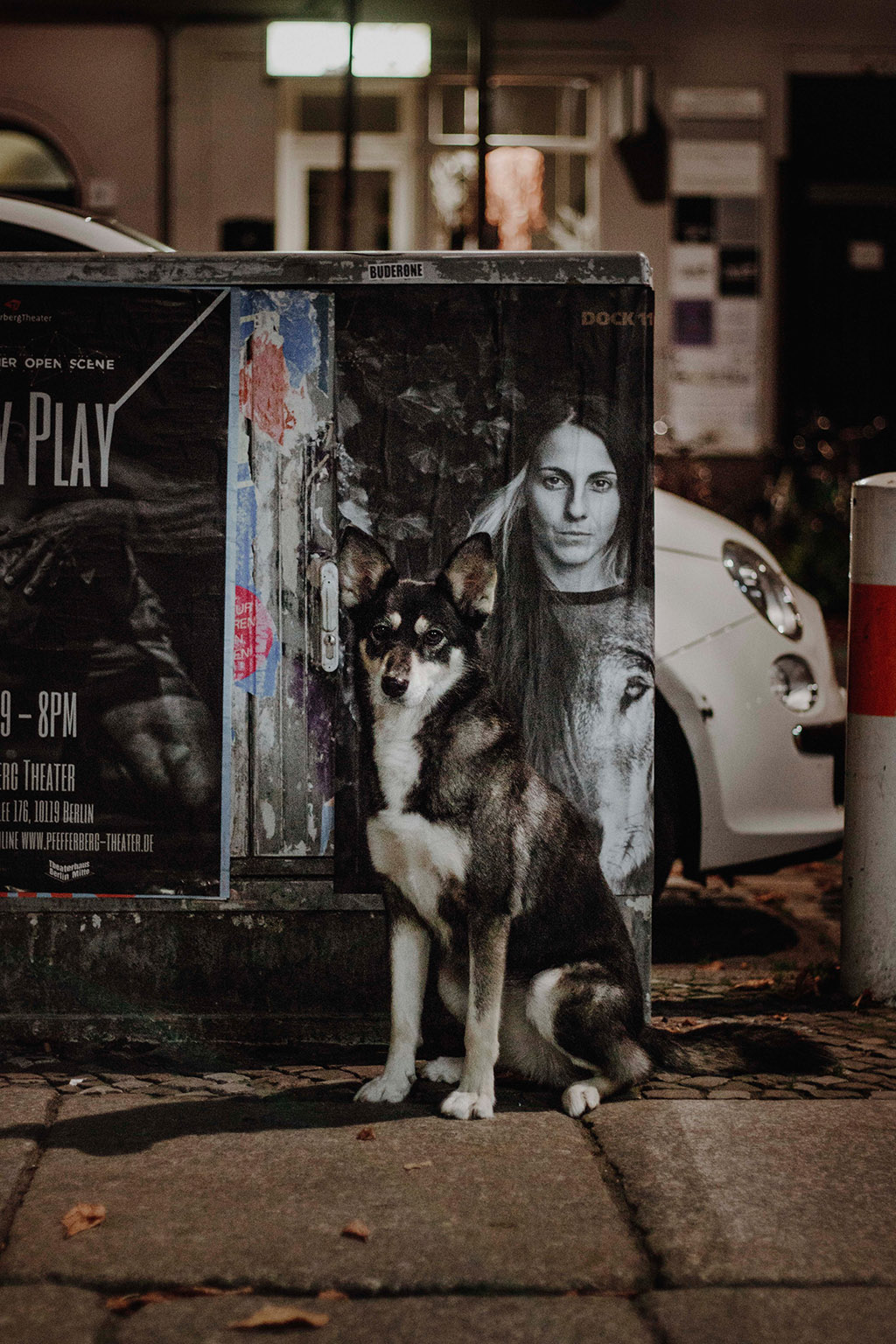
Laika and Barbara Berti / Dock 11 2018
“Funded by the Federal Government Commissioner for Culture and the Media in the programme
NEUSTART KULTUR, [aid programme DIS-TANZEN/ tanz:digital/ DIS-TANZ-START] of the Dachverband
Tanz Deutschland.”

www.kulturstaatsministerin.de/neustartkultur
BAU #1 – An interactive piece
From the serie BAU Choreography of thinking
2015-16
BAU #1 starts from the attention to the processes created by the “action of thinking” and the intentions such processes can produce. For example, in a space, how can we recognize a change in energy, understood as a state of the presence of the performer and the public? Starting from some practices related to meditation, BAU #1 explores the phenomenon of disembodiment in choreographic terms, creating, seeking and recognizing the moment of separation and detachment between the action of thinking, and thought itself. In order to try to focus on that indefinable condition of presence-in-absence, between mind and body, the areas of the non-human and non-verbal are explored, across movement and word. This production aims at constructing, experiencing and analyzing a guided meditation, as an inner process in dialogue and in interaction with the audience.
Concept, choreography, dance, text: Barbara Berti
Assistant choreography: Liselotte Singer
Dramaturgy advice: Carlotta Scioldo


 BARBARA BERTI